PILOT
Community data is spread across conversations, events, feedback, support requests, surveys, social channels and member activity. Community Intelligence brings these signals together.
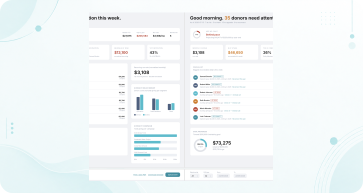
Conversations happen in one place. Events are managed somewhere else. Feedback arrives through several channels.
The result is a lot of community activity without a complete view of what that activity means.
Marketing Teams
Understand what members care about and which topics are generating engagement.
Customer Experience Teams
Connect member feedback and community conversations with the wider customer experience.
Community Teams
Monitor conversations, participation, sentiment and issues across the community.
Chief Community Officers
Understand community health, engagement and emerging member signals.
Business Leaders
Maintain visibility into performance, behaviour and areas requiring strategic attention.
Customer Success Teams
Understand recurring customer problems and identify patterns that may require product action.
Connect conversations, participation and feedback into one view.
Executive Community Reporting
Give leadership a clear view of community health. Understand participation, sentiment, key themes, emerging issues and areas requiring attention without relying on disconnected activity reports.
Community Action Management
Move from signals to action. Assign owners, track follow-ups and keep important community issues visible until they are resolved.
Community Opportunity Intelligence
Identify ideas, requests and areas of interest that could inform products, events, content or community programmes. Turn community conversations into inputs for wider business decisions.
Issue and Escalation Intelligence
Identify conversations that may require attention. Surface recurring complaints, unresolved questions and issues that could affect the wider community experience.
Feedback Intelligence
Bring member feedback into a structured view. Group similar feedback, identify recurring requests and make it easier for teams to understand what members are asking for.
Member Behaviour Intelligence
Understand patterns in member participation. Identify active groups, changes in engagement and signals that may indicate members are becoming less involved.
Topic and Trend Intelligence
Identify recurring topics and emerging themes across community discussions. See which subjects are gaining attention and which issues continue to appear over time.
Sentiment Intelligence
Understand how members are responding to products, experiences, events, announcements and other important topics. Surface changes in sentiment that may require further investigation.
Engagement Monitoring
Track participation and engagement patterns across your community. Identify changes in activity and understand where participation is increasing, declining or remaining stable.
Community Signal Intelligence
Identify the topics, questions, concerns and themes appearing across community conversations. Understand what members are talking about without manually reviewing every interaction.
Traditional community management depends on individual platforms, manual reviews and activity reports.
Traditional platforms focus on
Metrics, not judgement.
What Source Community HQ does instead
Decisions, ranked by impact.
Community Intelligence brings together the platforms and data sources used across your community.
No duplicate data entry.
No disconnected spreadsheets.
One continuously updated intelligence layer.
SAP
Microsoft Dynamics
Oracle
Workday
Salesforce
Procurement Platforms
Supplier Databases
Carbon Accounting
Data Warehouses
ESG Reporting Tools
Every role sees the same community intelligence through the lens of the decisions they own.
Gain a live view of organisational sustainability performance and regulatory readiness.
Chief Sustainability Officer
Understand where the largest ESG exposures exist and what actions reduce risk.
Board Risk Committee
Monitor evolving regulations and ensure reporting remains aligned with changing disclosure requirements.
Legal & Compliance
Identify supplier risks before they disrupt operations or impact sustainability targets.
Procurement
Connect ESG performance with financial outcomes and reporting obligations.
Finance
Community Intelligence helps organisations:
↓
Reduce manual reporting effort
↑
Improve regulatory readiness
⌕
Identify supplier risks earlier
▷
Produce faster board reporting
✓
Increase confidence in sustainability disclosures
◎
Improve executive decision-making
A recurring complaint. A drop in participation. A question nobody answered.
Community Intelligence brings them together so teams can see what is changing and decide where action is needed.
Common Early Signals
Watch for these patterns across your operations
⌸
A supplier's data quality begins to decline.
☷
A reporting requirement changes.
↘
An emissions target starts moving off track.
◌
A region becomes more exposed to climate risk.
◇
A material issue receives greater attention from regulators or stakeholders.
Community Intelligence, Not Just Community Management
Community Intelligence goes further.
A community generates information continuously.
01
What has changed?
02
What does it mean for the organisation?
03
What should happen next?
By connecting conversations, participation and feedback, teams can act on what members are actually saying.
So important member feedback does not remain buried inside conversations.
Each insight includes
Context
The background behind the issue and why it matters.
Business impact
The potential effect on operations, reporting or compliance standing.
Evidence
Supporting data points that confirm the pattern.
Next step
A recommended action to address the issue before it escalates.
Total carbon output
3.24M
tonnes of CO₂ equivalent emitted this year
↓ 6.2% vs prior year
GRI 305-1/2/3 · CSRD E1-6 · CDP C6
SAP ECC + Meter API · 14 Jan 2025 · 5,065 records
From our own operations
1.87M
fuel we burn · fleet · factories
↓ 4.8% vs prior year
GRI 305-1 · CSRD E1-6a · SBTi S1
SAP ECC cost centres 4400–4499 · 14 Jan 2025 · 847 records
Emissions per $M revenue
94.6
carbon tonnes per $M revenue generated
↓ 8.1% vs prior year
GRI 305-4 · CSRD E1-4 · SASB EM-CO-110a.1
SAP ECC emissions + Finance revenue · 14 Jan 2025
Science-based targets set
34%
business units with approved climate targets
↑ 12pts vs prior year
TCFD S2 · CSRD E1-1 · GRI 305
SBTi Registry + Internal tracking · Manual · 1 Jan 2025
Sustainability goals on track
72%
of all commitments being met this year
↑ 9pts vs prior year
GRI 2-25 · CSRD MDR-T · TCFD b.ii
Internal KPI tracking system · Updated 14 Jan 2025
Actions needing attention
18
open remediation items · 6 are overdue
⚠ Requires attention
GRI 2-25 · CSRD MDR-A · ISO 14001
Task management system · Real-time sync
Answers to the questions teams ask most often before a pilot.
Is ESG HQ an ESG reporting platform?
No. ESG HQ is an enterprise intelligence platform that sits above existing reporting systems and transforms ESG data into executive decision support.
Which reporting frameworks are supported?
The platform is designed to monitor organisations operating across multiple sustainability frameworks, including CSRD, ISSB, SEC Climate Disclosure, CDP and other emerging standards.
Does ESG HQ replace existing ESG software?
No. It complements existing sustainability systems by aggregating data, surfacing risks and generating executive insights.
Can ESG HQ integrate with existing enterprise systems?
Yes. The platform is designed to connect with ERP, procurement, HR, finance and sustainability platforms to create a unified intelligence layer.
Sustainability reporting tells you what happened.
See how ESG HQ transforms enterprise sustainability data into executive decisions.
Book a Live DemonstrationNo commitment required. Tailored to your organisation.