Blog
Why Manual Testing Still Matters in Modern Software Delivery

October 8, 2026

time
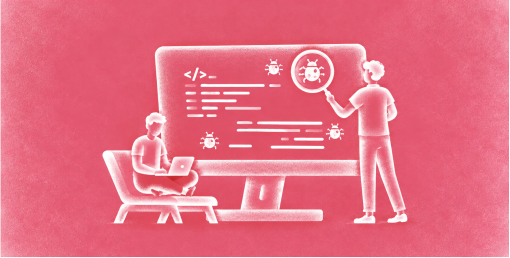
Automation has transformed how teams validate software. Yet many critical issues still surface only when a human tester walks through a real workflow, notices an awkward interaction, or questions whether the product behaves the way a user would expect.
Automated tests excel at checking known paths quickly and repeatedly. They are less effective at spotting:
These areas benefit from structured, human-led testing.
Manual testing is most valuable when it is purposeful rather than exhaustive. Experienced testers focus on high-risk workflows, new features, complex integrations, and areas where user experience matters most. They combine functional validation with usability observation and clear defect reporting.
This approach complements automation instead of competing with it. Automation handles the repetitive checks. Manual testing explores, questions, and validates the experience that actual users will have.
Teams that maintain strong manual testing practices typically release with fewer surprises. User-facing issues are caught earlier. Feedback to developers is more specific. Confidence in complex releases increases because critical journeys have been exercised by people who understand both the product and the user.
If your release process relies heavily on automation but still encounters usability or workflow problems in production, structured manual testing can close the gap. GlobalNodes Manual Testing Services provide functional testing, usability testing, regression support, cross-browser validation, and clear documentation to strengthen software quality before release.
Good software is not only functionally correct. It also needs to work smoothly for the people who use it.
Have a project in mind? We'd love to hear about it. Tell us what you're building and let's explore what's possible.
hello@globalnodes.com
+91 9873388887












