Blog
Technical Leadership in the AI Era: Building Fast Without Breaking What Matters

June 1, 2026

time
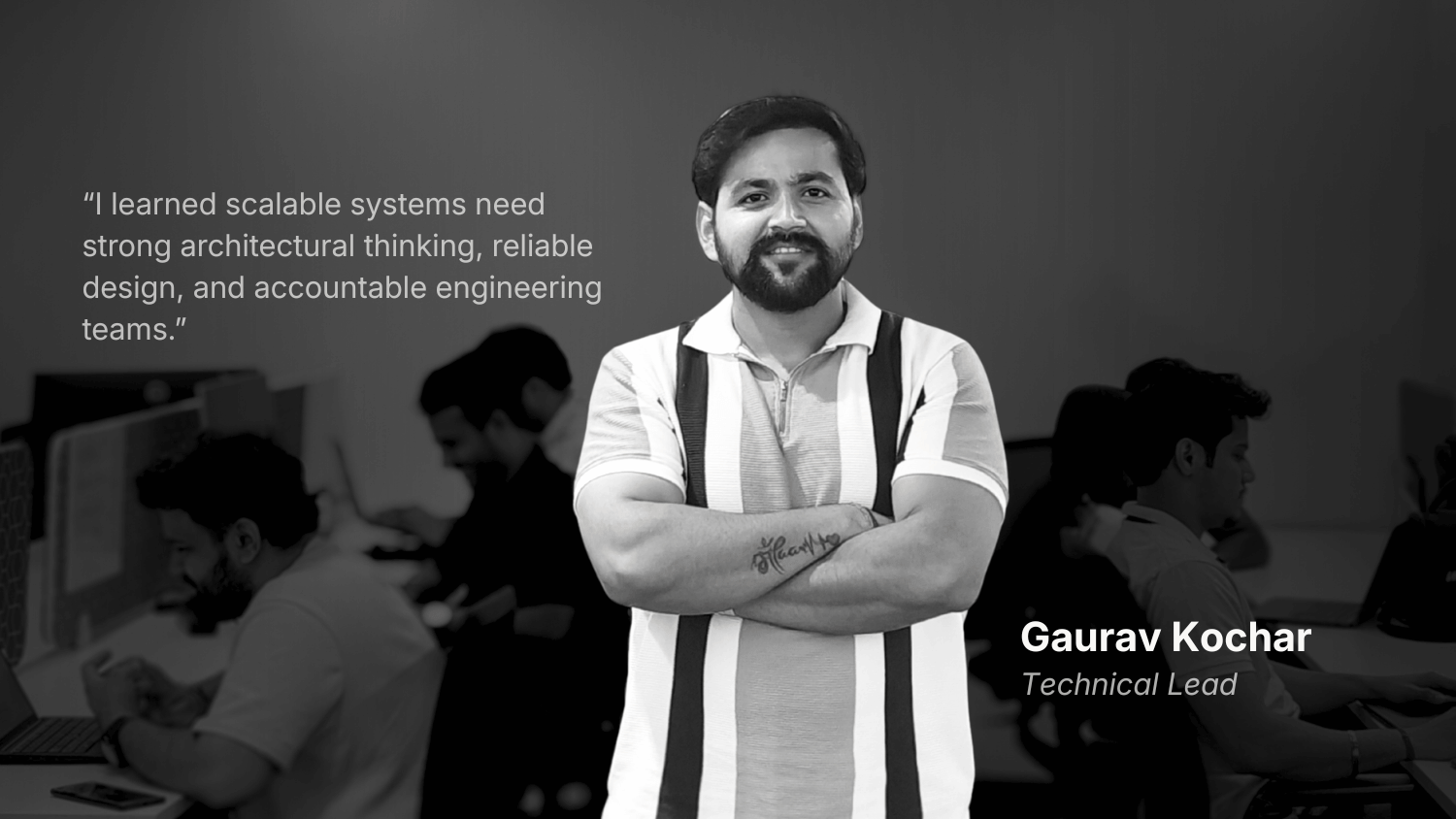
One of the biggest challenges in modern engineering is balancing speed with long-term quality.
Every growing company wants faster releases, shorter delivery cycles, and quicker product iterations. In high-growth environments, engineering teams constantly operate under pressure from deadlines, production releases, client expectations, and competitive timelines.
I've worked in those environments long enough to realize something important:
Fast delivery only creates value if the system remains stable, secure, and scalable afterward.
Otherwise, the speed becomes temporary and the cost eventually returns through outages, technical debt, security risks, or operational instability.
That realization has shaped how I approach technical leadership today. For me, sustainable delivery matters far more than simply shipping fast.
In theory, every engineering team wants clean architecture, proper testing, detailed documentation, and scalable systems. In reality, there are always business pressures pushing teams to move faster.
The challenge is not avoiding pressure. The challenge is understanding where acceleration is acceptable and where compromise becomes dangerous.
I strongly believe there are certain areas where engineering teams should never cut corners:
A feature delivered quickly but built on unstable foundations creates much larger business problems later.
One experience reinforced this lesson very clearly for me. We were working on a feature with a highly aggressive deadline, and the platform was expected to handle significant concurrent traffic once released. The easiest path would have been implementing shortcuts in backend handling and infrastructure design just to meet delivery timelines.
Instead, we made a conscious decision to invest additional effort upfront. We focused heavily on:
At the time, it felt slower. But when user traffic increased rapidly later, the platform handled the load smoothly without major bottlenecks or security concerns.
That experience reinforced something I deeply believe: Good engineering often feels slower in the short term but moves significantly faster in the long run.
A good developer can write efficient code. A technical leader understands the broader impact behind every engineering decision.
Over time, I've realized that leadership in engineering has very little to do with authority and everything to do with ownership, judgment, communication, and reliability under pressure.
One thing I observe very closely is how engineers behave during difficult situations. Production issues reveal far more about leadership potential than normal sprint work ever can.
I remember a situation where a critical production issue occurred just before an important client demo. The environment was stressful, timelines were tight, and everyone was feeling pressure.
One engineer stood out immediately. Instead of panicking, they calmly analyzed logs, coordinated with the team, communicated updates clearly, and focused entirely on solving the issue collaboratively. There was no blame, no emotional escalation, and no unnecessary noise.
The issue was resolved successfully, but what stayed with me was the composure and ownership shown during the process. That's the kind of behavior that builds trust.
Technical leadership is not just about solving problems technically. It's about creating stability for the team during uncertainty. The people I trust most with leadership responsibilities are those who combine technical depth with maturity, accountability, communication, and calm decision-making.
AI tools and engineering agents are fundamentally changing how software teams build products.
A few years ago, engineers spent significant time on repetitive implementation work:
Today, AI-assisted development is dramatically reducing that effort. Inside modern engineering workflows, AI is already improving productivity in areas like:
Tasks that once required hours of setup or research can now be prototyped much faster. That acceleration allows engineering teams to spend more time thinking about architecture, scalability, user experience, and product innovation instead of repetitive implementation work.
At the same time, I don't believe AI replaces engineering judgment. Experienced engineers are still essential for:
The role of developers is evolving from simply 'writing code' to designing intelligent systems, validating AI-generated outputs, and solving higher-level engineering challenges.
The strongest teams today are not the ones avoiding AI. They are the ones combining human expertise with AI-driven productivity responsibly.
One lesson I've learned repeatedly is that technical decisions directly influence business outcomes. Engineering architecture is never purely technical. It affects user experience, scalability, operational costs, client confidence, and long-term business growth.
In one project, our team identified that the existing architecture would struggle as traffic and real-time operations increased. Short-term fixes could have solved immediate problems, but they would have created much larger stability issues later.
Instead, we redesigned critical backend services using a more modular and scalable architecture. The decision required additional engineering effort upfront. We improved APIs, optimized database handling, introduced stronger monitoring systems, and restructured deployment workflows to improve platform reliability under load.
Later, during a critical business phase, the system experienced a major spike in user activity. Because of the earlier architectural decisions, the platform handled the traffic smoothly without major downtime or performance degradation.
That technical investment had a direct business impact:
Experiences like this reinforced my belief that architecture is not just an engineering concern. It's a long-term business enabler.
Before giving someone ownership of critical systems or architecture decisions, I look beyond technical skills alone. Strong ownership comes from judgment, accountability, communication, and reliability.
I pay close attention to how engineers approach:
One of the strongest indicators of maturity is proactive thinking. For example, when an engineer identifies a scalability risk before deployment or raises concerns about a potentially unstable release before it becomes a production issue, that demonstrates real engineering ownership.
I also value engineers who understand business context. The best technical decisions usually come from people who understand why a feature matters to users and how system reliability affects business outcomes.
Another important quality today is adaptability. Technology is evolving rapidly across AI systems, cloud infrastructure, distributed architectures, and automation workflows. Engineers who continuously learn and evolve create much more confidence over time.
Ultimately, I trust engineers with ownership when they consistently demonstrate sound judgment, reliability, calm decision-making, and the ability to take responsibility during both success and failure.
<checklist>
</checklist>
Modern technical leadership is no longer just about writing efficient code. It's about building systems and engineering cultures that can scale responsibly under pressure while adapting to rapid technological change.
AI is accelerating development speed across the industry, but speed alone is not enough. The teams that succeed long term will be the ones that combine fast execution with strong architecture, operational reliability, and sound engineering judgment.
Because in real-world engineering, the goal is not simply to ship faster. It's to build systems that continue working reliably long after the release is over.
Have a project in mind? We'd love to hear about it. Tell us what you're building and let's explore what's possible.
hello@globalnodes.com
+91 9873388887