Blog
Precision Line Monitoring: Computer Vision for High-Speed Manufacturing

October 28, 2026

time
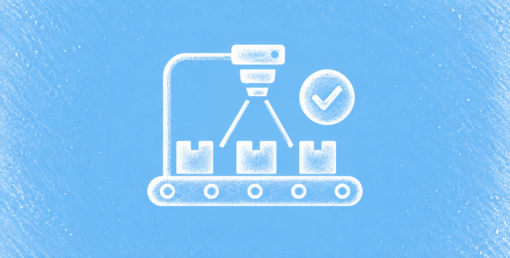
On a fast production line, a defect can be created and passed to the next stage before a human inspector has time to react. A small scratch, a missing component, a misaligned part, or a faulty label may seem insignificant at first, but repeated defects can lead to substantial scrap, rework, and customer complaints.
Computer vision gives manufacturers a way to inspect products continuously using cameras and AI models. Instead of relying entirely on manual inspection, a system can examine images as products move through production and flag items that need attention.
The challenge is making the system accurate and fast enough for real factory conditions.
Precision line monitoring uses cameras and image-processing models to check product quality at defined points in the manufacturing process.
Depending on the industry, it might identify surface defects, verify component placement, inspect packaging, detect missing parts, or measure whether an object falls within expected visual dimensions.
Not every task requires deep learning. Fixed vision algorithms may be sufficient for stable measurements or clearly defined shapes. AI-based computer vision is particularly useful when defects vary in appearance and cannot be captured reliably with a small set of rules.
The first step is to identify the inspection problem and the cost of getting it wrong.
A model is only as useful as the data and conditions under which it is evaluated.
Manufacturers need representative images of both acceptable products and known defects. The dataset should reflect changes in lighting, material finish, camera position, production speed, and product variation.
Rare defects require particular attention. A model can appear highly accurate simply because most products are defect-free. That does not prove it can detect the defects that matter most.
Evaluation should therefore measure defect detection rates, false rejects, performance across defect categories, and inference latency. The system also needs to be tested on production data that was not used to train the model.
Where defect examples are limited, anomaly detection or synthetic data may help, but the results still need validation against real factory conditions.
In high-speed manufacturing, sending every image to a remote cloud service can introduce latency and dependence on network connectivity.
Edge AI runs inference close to the production line, often on an industrial computer or dedicated accelerator. This can reduce response times and allow inspection to continue when external connectivity is interrupted.
The trade-off is that edge hardware has limited processing capacity. The model must fit within the available resources while meeting throughput requirements.
Camera placement and lighting matter just as much. A sophisticated model cannot reliably identify a defect that the camera does not capture clearly.
An inspection system should do more than display a red warning on a dashboard.
It should connect findings to the appropriate manufacturing execution system, quality management platform, or operator workflow. Where appropriate and validated, the result may trigger a secondary inspection or controlled product rejection.
Each result should include useful context, such as the product identifier, batch, timestamp, inspection station, and detected defect category. This helps quality teams investigate recurring issues and trace problems back to a production stage or supplier lot.
AI should not bypass machinery safety systems. Safety-critical control must remain within approved and validated control architectures.
Production environments change. A new supplier may introduce different surface finishes, lighting may shift, and new product variants may alter the appearance of acceptable items.
Manufacturers should monitor model performance, review false positives and missed defects, and establish a controlled process for model updates.
Retraining should use versioned datasets and documented evaluation. A new model should be tested before deployment, and teams should be able to roll back if performance deteriorates.
Useful metrics include defect escape rates, inspection throughput, scrap, rework, manual inspection effort, false rejects, and downtime associated with quality problems.
A sensible pilot starts with one line and one clearly defined defect category. The model can first operate in shadow mode, recording predictions without controlling production. This lets the team compare AI outputs with existing inspection results.
Once performance has been demonstrated, the manufacturer can introduce operator-assisted inspection or carefully controlled automation.
Precision line monitoring works when computer vision becomes part of the production process, supported by reliable hardware, good data, system integration, and ongoing monitoring. The objective is not simply to detect defects in images. It is to find quality problems early enough to prevent them from becoming larger operational problems.
Have a project in mind? We'd love to hear about it. Tell us what you're building and let's explore what's possible.
hello@globalnodes.com
+91 9873388887












