Blog
Multi-Tenant Considerations for Enterprise Agent Platforms

September 21, 2026

time
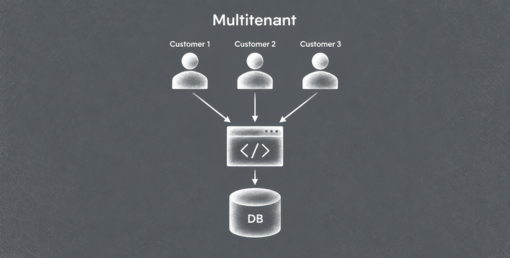
Enterprise agent platforms rarely serve a single team.
The same infrastructure may power agents for finance, HR, sales, customer support, engineering, or entirely different customers. Sharing infrastructure reduces duplication and makes centralized operations easier, but it introduces a difficult architectural question:
How do you share the platform without sharing the wrong data, permissions, or resources?
For enterprise multi-tenant AI platforms, isolation must exist across data, identity, tools, configuration, compute, and observability.
Traditional SaaS applications generally control data access through application APIs and database permissions.
Agents add another layer.
An agent can retrieve documents, call APIs, access memory, execute tools, and delegate work to other agents. A poorly designed permission boundary can therefore expose information indirectly.
For example:
Tenant A → Agent → Shared Retrieval System → Tenant B document
The database may be secure at the application level while the retrieval layer accidentally returns another tenant's document.
Multi-tenancy therefore needs defense in depth.
Every tenant-owned object should carry an explicit tenant identifier.
This applies to:
Conversations
Agent memory
Documents
Embeddings
Vector indexes
Tool results
Files
Evaluation data
Audit logs
For shared vector databases, tenant filtering must happen at retrieval time, not only after results have been returned.
A stronger architecture combines:
Tenant identity → authorization policy → filtered retrieval → output validation
For highly sensitive customers, physical or logical separation may be preferable to shared storage.
The right model depends on regulatory requirements, risk tolerance, scale, and operational cost.
Tenant isolation should begin with authenticated identity.
A useful authorization model is:
User → Tenant → Role → Agent → Tool → Resource
For example, a finance employee might be permitted to use a financial-reporting agent but not an HR agent.
More importantly, the agent itself should not receive unrestricted credentials.
Use narrowly scoped service identities and permissions so that an agent can perform only the actions required for its workflow.
Shared infrastructure creates another problem: one tenant can consume disproportionate resources.
Imagine one customer launches thousands of agent workflows while another customer is running a handful of critical workflows.
Without resource controls, the first tenant can consume:
Model capacity
GPU/CPU resources
Database connections
Queue capacity
Tool API quotas
Memory
Network bandwidth
This is the classic noisy-neighbor problem, amplified by unpredictable agent workloads.
Implement tenant-level quotas for:
Concurrent workflows
Requests per minute
Token consumption
Tool calls
Storage
Queue depth
Maximum workflow duration
Rate limits should ideally be enforced before expensive model execution begins.
A multi-tenant platform should distinguish between shared infrastructure and tenant-specific behavior.
Shared:
Agent runtime
Model gateways
Observability
Orchestration framework
Common tool adapters
Security controls
Tenant-specific:
System prompts
Knowledge bases
Memory
Model configuration
Tool permissions
Business rules
Guardrails
Retention policies
This allows engineering teams to reuse common components without creating a single global configuration that becomes difficult to govern.
A tenant may customize an agent significantly.
For example:
Agent: Customer Support
Tenant A — Model: Model-X, Prompt: v7, Tools: CRM + Ticketing
Tenant B — Model: Model-Y, Prompt: v4, Tools: CRM only
Configurations should therefore be explicit, versioned, and auditable.
Avoid hidden tenant-specific behavior buried inside application code.
A configuration registry can provide:
Tenant → Agent → Version → Permissions → Resources
This makes changes easier to reproduce and roll back.
Reusability is one of the main benefits of a platform architecture.
A company may maintain one common agent framework while allowing dozens of business units to use it.
The important distinction is:
Shared code ≠ shared state
A common orchestration component can serve multiple tenants while keeping:
Memory isolated
Retrieval isolated
Credentials isolated
Configuration isolated
Logs access-controlled
Similarly, a shared model endpoint does not mean tenants should share conversational context.
Enterprise customers need to answer:
Who initiated this workflow?
Which tenant did it belong to?
Which agent version ran?
Which documents were retrieved?
Which tools were called?
Which permissions were used?
What actions were taken?
Which configuration was active?
Every important event should therefore carry a consistent tenant ID, user ID, workflow ID, and agent version.
For example:
tenant_id: finance-us
user_id: 4821
workflow_id: wf-98231
agent_version: support-v3.4
tool: invoice_lookup
action: read
timestamp: ...
Audit logs themselves must also be isolated. A tenant administrator should not automatically be able to inspect another tenant's execution history.
A particularly subtle issue appears when improving agents using production data.
Suppose a platform uses conversations from all customers to improve prompts, evaluations, or retrieval.
The platform must define exactly what can be reused.
Potentially sensitive tenant information should not silently become part of a shared knowledge base or training dataset.
A safer architecture distinguishes:
Tenant-specific data
from
Approved platform-level learning data
with explicit governance around anonymization, consent, retention, and access.
A mature enterprise platform can follow this structure:
Enterprise Agent Platform
↓
Identity & Policy
↓
Tenant Context
↓
Agent Runtime (Tenant Config, Tenant Memory) · Retrieval (Tenant Index, Tenant Filter) · Tools (Scoped IAM, Tenant Quota)
↓
Audit & Observability
The platform remains shared, while security-sensitive state and permissions remain tenant-scoped.
There is no single correct tenancy model.
Fully shared infrastructure offers better utilization and simpler operations but requires stronger logical isolation.
Dedicated infrastructure provides stronger isolation but increases cost and operational complexity.
Many enterprise platforms therefore adopt a hybrid model:
Shared control plane + isolated tenant data + configurable execution capacity
The critical principle is simple:
Reuse the platform, not the tenant boundary.
When identity, data, permissions, resources, configuration, and audit trails are explicitly tenant-aware, organizations can achieve the economics of shared infrastructure without turning multi-tenancy into a security or reliability risk.
Have a project in mind? We'd love to hear about it. Tell us what you're building and let's explore what's possible.
hello@globalnodes.com
+91 9873388887