Blog
Human-Centric Design in the Age of AI: Lessons from a Product Designer

May 26, 2026

time
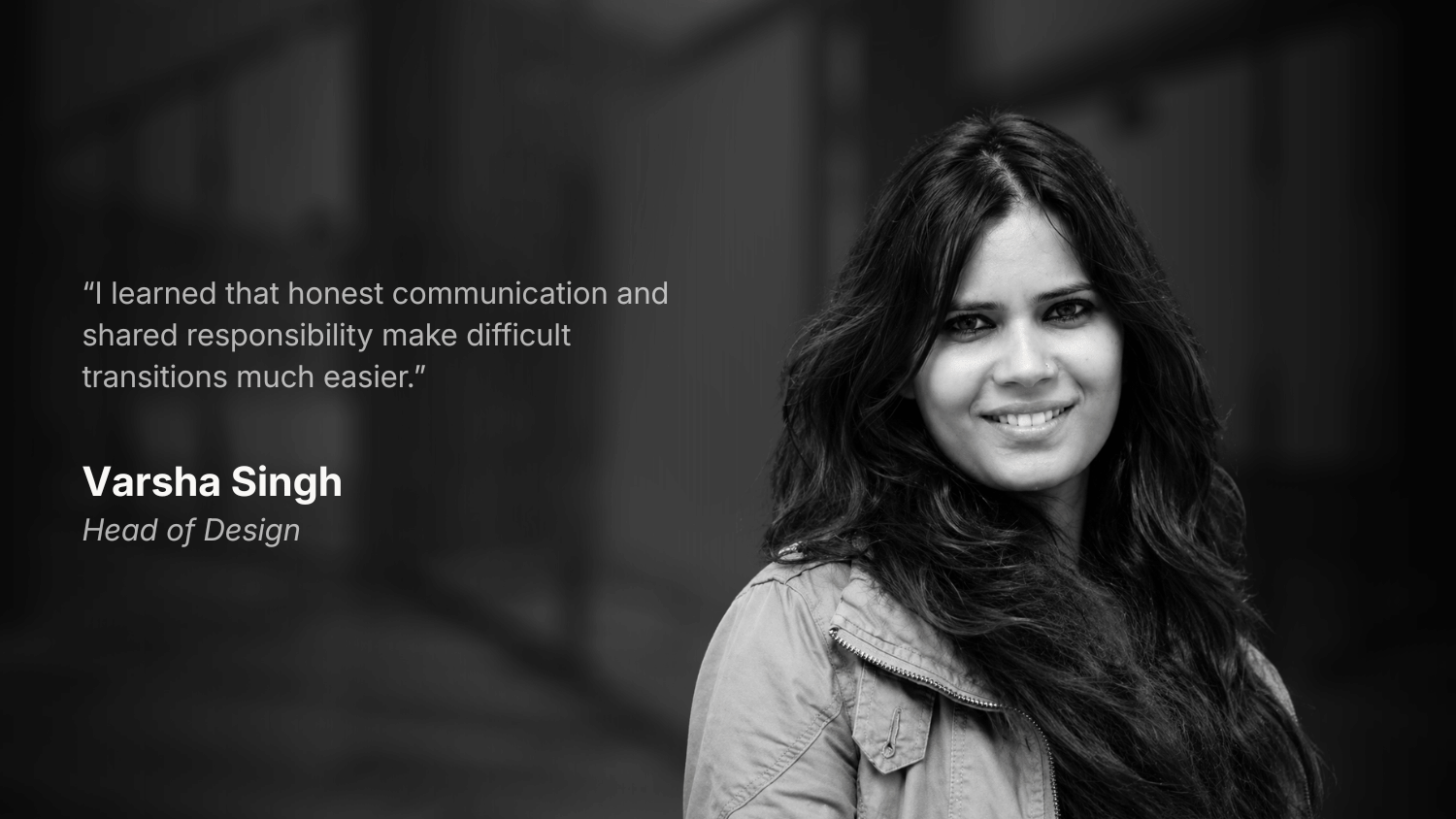
Design has never been more powerful or more misunderstood. As AI takes on more of the execution work, the temptation is to believe great design is now mostly about knowing the right tools and generating outputs faster. That belief leads to products that look polished but feel broken: products that prioritise capability over clarity, aesthetics over usability and AI performance over human confidence. These are the lessons that have shaped how I think, work and lead.
Human-centric design in the age of AI means designing for user confidence and trust, not just showcasing system capability. The designers who stand out combine systems thinking, user empathy, product strategy and technological fluency. Strategic design leadership begins with asking why a product exists rather than how it should look, and the best work removes friction rather than adding decoration.
<numberList>
The most important question I ask at the start of any AI-driven design project is not what the system can do, it is how the user will feel when they use it. Human-centric design in AI products means designing for confidence. AI should reduce effort, increase clarity and support decision-making without removing user control. The moment a product starts making decisions on behalf of the user without explanation, trust breaks down.
To prevent that breakdown I build transparency and explainability into the experience from the very beginning. Users need to understand why the system behaves a certain way. Feedback loops, accessibility and clear usability signals are not optional features added at the end of a project. They are foundational to the entire design. When users can see the reasoning behind the product, they trust it. When they trust it, they use it. That is the real metric that matters.
The designers making the biggest impact today are not the ones with the most impressive visual portfolios, they are the ones who think beyond screens. Standing out requires combining systems thinking, product strategy, user empathy, research and business understanding into a single way of working. The strongest designers are shaping product direction, collaborating deeply with engineering and AI teams and making decisions backed by both data and user insight.
</numberList>
<numberList>
One decision that had a significant impact for me was redesigning a complex, multi-step onboarding and campaign creation flow into a more guided, context-aware experience. The original flow overwhelmed users by presenting all configuration options upfront. Users had to navigate through everything, even when they only needed a fraction of it at that stage. The result was high drop-off, low activation and a product that felt operationally heavy.
The redesign introduced progressive disclosure based on user intent, behaviour and stage in the journey. Cognitive load dropped significantly and users began to perceive the product as smarter and easier rather than complex and demanding. Personalization was the other major lever. Tailoring workflows, recommendations and interface states based on user context created a more relevant experience at scale. The best design work is rarely about adding more. It is almost always about removing friction.
In enterprise and AI-focused products, clarity always comes first. Creativity that distracts from comprehension, trust or efficiency is not creativity, it is noise. I use creativity to simplify complexity: better workflows, clearer visual hierarchy, consistency across visual and experiential dimensions, meaningful interactions and thoughtful microcopy. Good product design is not about decoration. It is about creating experiences that are simple, purposeful and frictionless while still feeling polished and engaging.
</numberList>
<numberList>
The shift from execution to strategic design leadership is a different kind of work entirely. The most important move young designers can make is to stop asking how something should look and start asking why it exists. Understanding the problem a product is solving, the root cause behind user pain points and the business context driving decisions is what separates execution-level designers from strategic ones.
Strong design leaders understand user behaviour, conduct meaningful research, think about product strategy and connect user needs with company goals. Adaptability to emerging technologies matters more than ever. There is one important boundary though: designers should not become completely dependent on technology. Tools and AI can accelerate execution but critical thinking, empathy and problem understanding still come from the designer. Technology should enhance human thinking, not replace it.
</numberList>
<checklist>
</checklist>
The most interesting design work happens in the tension between simplicity and sophistication, between human judgment and technological possibility. The designers who grow fastest are the ones who combine strong fundamentals with curiosity and a willingness to evolve alongside technology, without ever losing sight of the user behind the screen. That is what human-centric design looks like in an AI-driven world.
Have a project in mind? We'd love to hear about it. Tell us what you're building and let's explore what's possible.
hello@globalnodes.com
+91 9873388887