Blog
Engineering Leadership: What I Learned the Hard Way

May 28, 2026

time
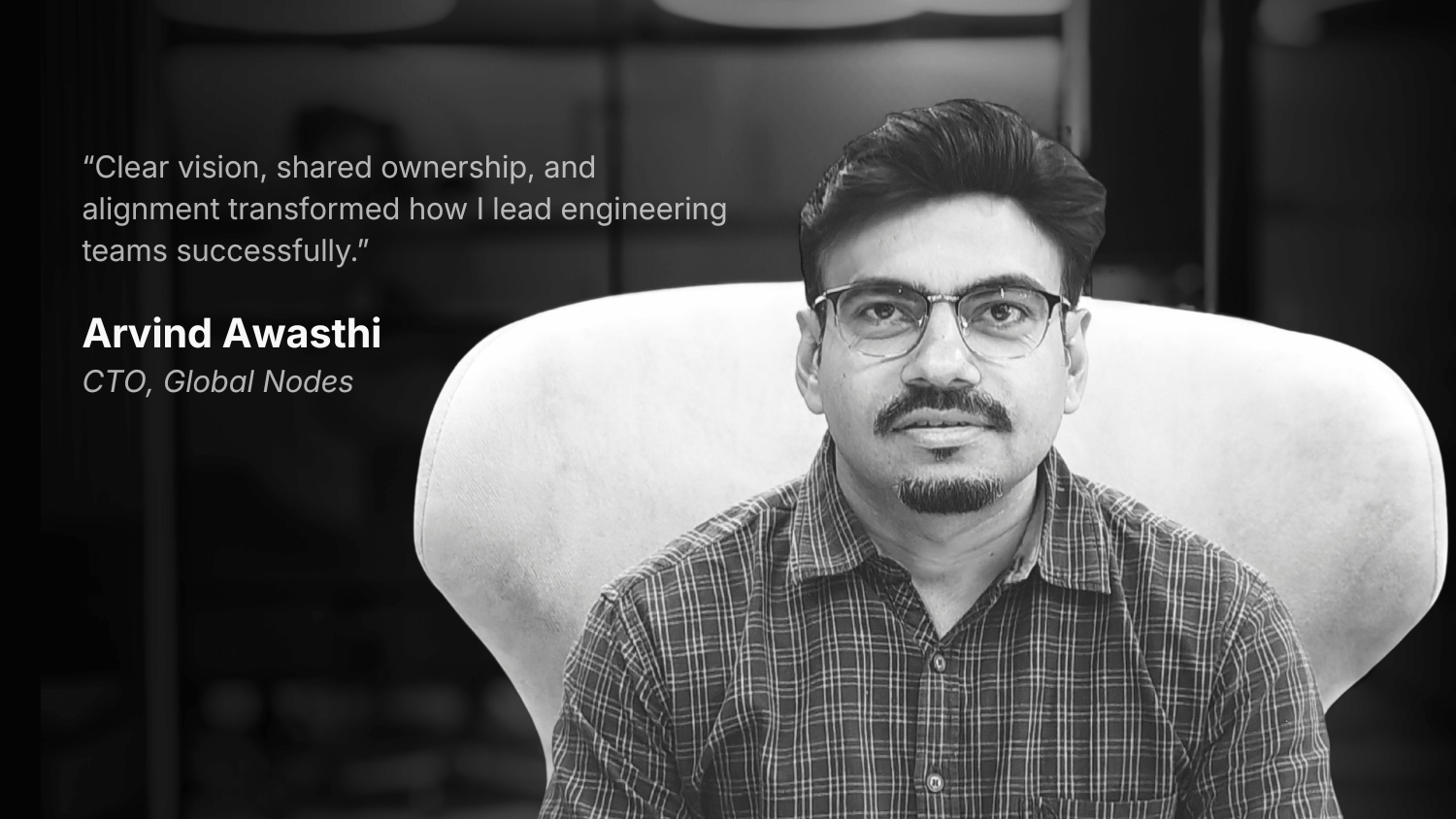
Most people think running an engineering organisation is about hitting deadlines. I used to think that too, until projects that delivered on time still failed to move the needle. Over the years, my assumptions have been challenged, my frameworks dismantled, and my priorities reordered. What follows is an honest account of the beliefs I have had to unlearn and the things I wish someone had told me earlier.
Engineering leadership is not primarily about shipping on time. It is about setting a clear vision, building shared ownership across functions, and scaling clarity and decision-making across the organisation. Delivery is an outcome, not a strategy, and scaling people consistently beats scaling technology when it comes to creating sustained business impact.
<numberList>
Ask someone what an engineering leader does, and you will hear some version of making sure things ship on time. Delivery, timelines and velocity dominate sprint reviews and quarterly reports. At a true leadership level the job is something else: building a vision that gives the team a north star, enabling scalable execution and sitting at the intersection of business and technology so neither side speaks a language the other cannot understand.
The real work is creating an environment where innovation happens consistently, not as a lucky accident but as a repeatable outcome. When leaders obsess over delivery alone, they optimise for the short term at the expense of everything that makes delivery sustainable. The real work of engineering leadership lives upstream of the sprint board.
I have led strong teams and worked on products with genuine market potential, and watched both struggle not because of technical gaps but because goals were not clearly defined across stakeholders and execution teams. The symptom was confusion: tickets built to one spec while the business expected another. The root cause was a failure of clarity, not effort. Before I think about execution now, I ask whether everyone from the business stakeholder to the engineer writing the code understands what we are building and why it matters.
</numberList>
<numberList>
Some cross-functional teams thrive while others with equally talented people consistently underdeliver. The answer people reach for is communication. Better standups, more alignment meetings, clearer documentation. These things help, but they are not the differentiator. The ingredient most overlooked is shared ownership. When everyone feels responsible for the final outcome rather than just their part, handoffs stop being the enemy and people lean into problems that are not technically theirs.
The next two to three years will see businesses move from traditional software-driven operations to AI-driven adaptive enterprises where decision-making, execution, customer engagement and operational workflows become increasingly intelligent and autonomous. Technology teams stop being a support function and become core strategic drivers of growth, efficiency and innovation. The engineering organisation is not servicing the business plan. It is the business plan.
The organisations that win this transition will not simply be the ones that adopt the best AI tools. They will be the ones that redesign their processes, culture and execution models around continuous intelligence and rapid adaptability. The ones that wait for the technology to stabilise before changing how they operate will find themselves perpetually catching up.
</numberList>
If I could give my earlier self one piece of advice, it would be that scaling technology is the easy part. Building distributed systems, managing technical debt and maintaining reliability at scale are not trivial, but compared to what actually determines whether an organisation succeeds, the technical problems are tractable. They have known patterns, established tooling and communities of practice to draw from.
Scaling clarity, decision-making and execution across an organisation is the hard problem and the one that does not come with a framework you can download. The real value of leadership comes from aligning people, vision and strategy so that teams can move with confidence and purpose, not just speed. Speed without alignment is just expensive chaos, and rigorous investment in shared understanding is what turns technical work into business outcomes.
<checklist>
</checklist>
These are lessons I am still learning. The deeper I go into engineering leadership, the more convinced I am that scaling people, vision and clarity matters far more than scaling any individual system. If you are leading a technology organisation today, the most valuable work you can do is upstream of the sprint board, in the shared understanding that lets your team move with both speed and purpose.
Have a project in mind? We'd love to hear about it. Tell us what you're building and let's explore what's possible.
hello@globalnodes.com
+91 9873388887