Blog
Christine Lagarde on Europe AI: Why Sovereign AI Is Becoming a Bigger Issue

September 23, 2026

time
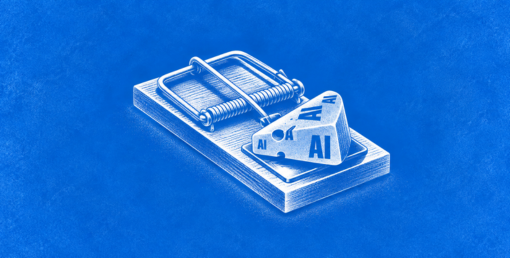
Europe's AI debate is increasingly moving beyond regulation.
European Central Bank President Christine Lagarde has argued that Europe needs stronger domestic AI capabilities and infrastructure to reduce dependence on technology developed elsewhere.
Her argument reflects a broader discussion around technological sovereignty.
Europe currently relies heavily on AI models, cloud platforms and computing infrastructure developed by companies outside the region.
That dependence can become strategically important.
If access to a critical technology changes because of commercial decisions, geopolitical tensions or export restrictions, European businesses could face disruption.
AI is increasingly becoming part of banking, manufacturing, healthcare, logistics and public services. Dependence therefore extends beyond software.
Lagarde has also highlighted Europe's shortage of data center capacity.
According to figures cited in reporting on her remarks, the U.S. accounts for a much larger share of global AI computing capacity than Europe.
That gap matters because advanced AI requires enormous computing resources.
Building European AI therefore means more than creating European models.
It requires:
Data centers
Energy infrastructure
Semiconductor access
Cloud platforms
Research talent
High-quality datasets
AI engineering capabilities
Companies may increasingly have to think about where their AI runs, not just which model they use.
Data residency, regulatory requirements, vendor concentration and infrastructure resilience could become strategic procurement considerations.
The European AI conversation is therefore evolving.
The question is no longer only how Europe should regulate AI.
It is also about whether Europe can build enough of the underlying technology to maintain meaningful control over its digital economy.
Have a project in mind? We'd love to hear about it. Tell us what you're building and let's explore what's possible.
hello@globalnodes.com
+91 9873388887