Blog
AI Workflow Automation vs. Traditional RPA: Which Approach Works Best for Enterprise Operations?

October 29, 2026

time
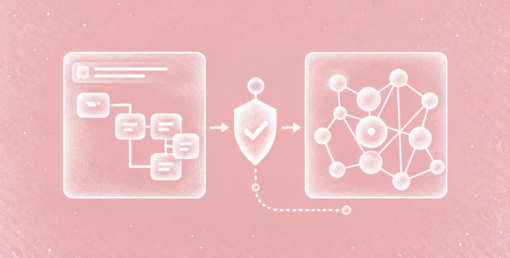
Businesses are constantly looking for ways to reduce manual work, improve efficiency, and manage growing workloads without increasing operational costs. Robotic process automation (RPA) has helped companies automate repetitive tasks for years. However, as business processes become more complex, traditional automation can struggle with unstructured information, changing requirements, and situations that require judgment.
This is where AI workflow automation comes in. By combining artificial intelligence with workflow orchestration, businesses can automate tasks that involve interpreting information, making recommendations, and coordinating actions across different systems.
Understanding AI workflow automation vs. RPA helps enterprises choose the right approach for their operational needs.
Traditional RPA uses software bots to perform repetitive, rule-based tasks. These bots follow predefined instructions to interact with applications, transfer data, fill out forms, and process transactions.
For example, an RPA bot can extract invoice numbers from structured files, copy information into an accounting system, and update payment records according to established rules.
RPA works particularly well when processes are predictable, inputs follow consistent formats, and the steps rarely change. It can reduce manual data entry, improve consistency, and free employees from repetitive administrative work.
However, traditional RPA may struggle when information arrives in different formats or a process requires interpreting an ambiguous email, understanding a document, or responding to an unexpected situation.
AI workflow automation combines automation tools with technologies such as machine learning, natural language processing, and large language models. AI agents can interpret information, identify relevant context, and determine the next appropriate action within defined permissions.
Consider an invoice processing workflow. An RPA bot might transfer invoice data between systems using predefined fields. An AI-powered workflow can go further by extracting information from different invoice formats, identifying potential discrepancies, and recommending how exceptions should be handled.
When connected to enterprise resource planning (ERP) and accounting systems, an AI agent can gather supporting information and route unusual transactions for human approval.
This makes AI workflow automation useful for processes involving variable inputs, document analysis, customer communications, and decisions that depend on context.
However, AI outputs are not always accurate or predictable. Important actions still require validation, business rules, and appropriate human oversight.
The right approach depends on the process you want to automate.
Traditional RPA is often the better choice for stable, repetitive tasks with clear rules, such as copying structured data, updating records, or generating routine reports.
AI workflow automation is more suitable when tasks involve unstructured data, changing inputs, language interpretation, or multiple possible next steps.
For example, a company processing employee expense claims could use AI to extract details from receipts and identify potentially unusual claims, while RPA handles structured data entry. A human reviewer can approve exceptions before reimbursement is processed.
This combination allows businesses to benefit from both technologies without relying on AI for every task.
Enterprises do not necessarily need to replace their existing RPA systems to adopt AI. Instead, they can integrate AI capabilities into established workflows where traditional automation reaches its limits.
AI can interpret incoming information, classify requests, and recommend actions, while RPA executes predictable steps across legacy applications. Workflow orchestration connects these activities and manages approvals, exceptions, and handoffs.
Businesses should begin with a clearly defined process, assess integration requirements, and measure improvements in processing time, error rates, operating costs, and exception handling.
AI workflow automation vs. RPA is not always an either-or decision. Traditional RPA remains valuable for predictable, rule-based tasks, while AI expands automation into workflows that require interpretation and adaptability.
For many enterprises, the most practical strategy is to combine both approaches. By matching the technology to the task, businesses can reduce manual effort, improve operational efficiency, and build automation systems that scale with their needs.
Have a project in mind? We'd love to hear about it. Tell us what you're building and let's explore what's possible.
hello@globalnodes.com
+91 9873388887












