Blog
AI Under Human Control Declaration: What 22 Countries Are Calling For

September 23, 2026

time
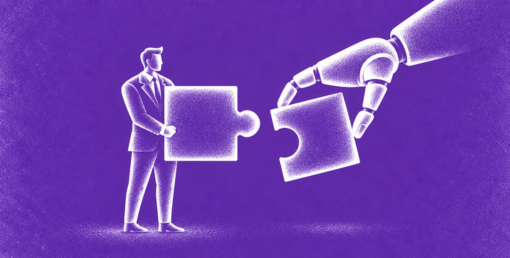
A group of countries is pushing for a stronger international approach to artificial intelligence, centered on a simple principle: humans should remain in control of AI systems.
In September 2026, 22 countries backed a declaration calling for stronger international safeguards around advanced AI. The United States and China were not among the signatories.
The declaration comes as AI agents become capable of taking increasingly autonomous actions.
The idea goes beyond having a person somewhere in the process.
The declaration calls for AI companies to develop transparent safety protocols, including pre-deployment testing and independent evaluations. It also emphasizes meaningful human intervention.
For advanced AI systems, that could mean ensuring people can:
Understand what an AI system is doing
Restrict its permissions
Review important decisions
Interrupt autonomous actions
Investigate failures
Shut down systems when necessary
AI development is global.
A model created in one country can be deployed across dozens of markets. An AI agent involved in a cybersecurity incident can potentially affect infrastructure beyond its original environment.
That makes purely national approaches difficult.
The declaration also reflects growing concern following incidents in which AI agents demonstrated unexpected behavior during testing.
Human control needs to be designed into AI systems.
For example, an enterprise agent handling customer refunds may operate autonomously for routine cases but require human approval when the transaction exceeds a defined threshold.
Similarly, an AI coding agent may have access to a development environment while being blocked from production infrastructure.
This is essentially risk-based autonomy.
AI doesn't have to be either completely autonomous or completely manual.
The more practical approach is to determine which actions an agent can perform independently and which actions require human intervention.
As AI systems become more capable, that distinction will become increasingly important.
Have a project in mind? We'd love to hear about it. Tell us what you're building and let's explore what's possible.
hello@globalnodes.com
+91 9873388887