Blog
AI Orchestration Explained

July 23, 2026

time
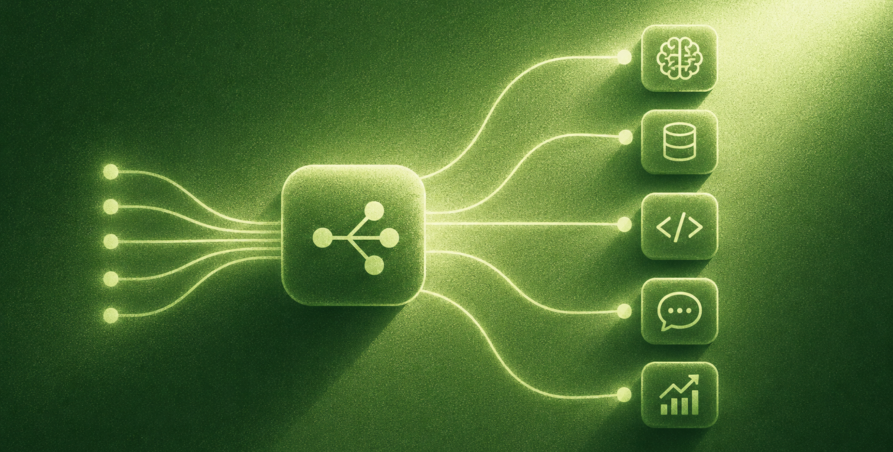
As organizations adopt multiple AI models, autonomous agents, and enterprise applications, managing these systems becomes increasingly complex. Simply deploying AI models is no longer enough. Businesses need a way to coordinate how different models, tools, data sources, and workflows interact. This is where AI orchestration comes in.
Understanding the orchestration meaning in AI helps organizations build intelligent systems that are scalable, reliable, and capable of delivering consistent business outcomes.
AI orchestration is the process of coordinating multiple AI models, agents, tools, and business applications to complete complex tasks efficiently. Rather than relying on a single model to perform every function, orchestration enables specialized components to work together in a structured workflow.
For example, an enterprise AI system might:
AI orchestration ensures each step happens in the correct sequence while maintaining context throughout the workflow.
Modern AI applications often involve multiple technologies working together. Without orchestration, businesses face disconnected systems, inconsistent outputs, and operational inefficiencies.
A well-designed orchestration layer helps organizations:
It transforms individual AI models into complete business solutions.
The orchestration engine defines the sequence of tasks, ensuring each action is completed before the next begins.
Examples include approval workflows, document processing, and customer service automation.
Different AI models have different strengths.
An orchestration platform can automatically select the most suitable model based on:
This improves both performance and cost efficiency.
Modern enterprise systems often include multiple AI agents that specialize in different functions.
For example:
The orchestration layer coordinates communication between these agents to complete complex objectives.
AI orchestration connects enterprise data sources such as:
Providing real-time access to business data enables AI systems to deliver more accurate and context-aware results.
Enterprise AI requires continuous oversight.
Orchestration platforms monitor:
This visibility helps organizations maintain reliable AI operations.
An AI system receives a customer query, searches company documentation, generates a response, updates the support ticket, and escalates the issue to a human agent if necessary.
AI orchestrates patient record retrieval, symptom analysis, appointment scheduling, follow-up reminders, and clinician notifications within a single workflow.
Banks orchestrate fraud detection models, risk assessment engines, compliance checks, and reporting systems to process transactions securely.
AI workflows automate resume screening, interview scheduling, candidate communication, and onboarding documentation across multiple enterprise systems.
Organizations implementing AI orchestration can achieve:
These advantages allow businesses to move from isolated AI tools to enterprise-wide intelligent automation.
Although the terms are often used interchangeably, they are different.
AI AutomationAI OrchestrationAutomates individual tasksCoordinates complete workflowsUsually involves one systemConnects multiple AI models and enterprise applicationsFocuses on executionFocuses on workflow management and collaborationLimited scalabilityDesigned for enterprise-scale operations
Automation performs tasks, while orchestration manages how those tasks work together.
To build scalable AI orchestration systems, organizations should:
Following these practices ensures AI systems remain reliable, secure, and adaptable as business requirements evolve.
AI orchestration is the foundation of modern enterprise AI. It enables multiple models, autonomous agents, data sources, and business applications to work together as a unified system rather than isolated tools.
As organizations continue investing in intelligent automation, AI orchestration will play a crucial role in building scalable, efficient, and future-ready AI ecosystems. Businesses that master agent orchestration can streamline operations, improve customer experiences, and unlock greater value from their AI investments.
Have a project in mind? We'd love to hear about it. Tell us what you're building and let's explore what's possible.
hello@globalnodes.com
+91 9873388887