Blog
AI in Cybersecurity: 15 Lessons for 2026

July 15, 2026

time
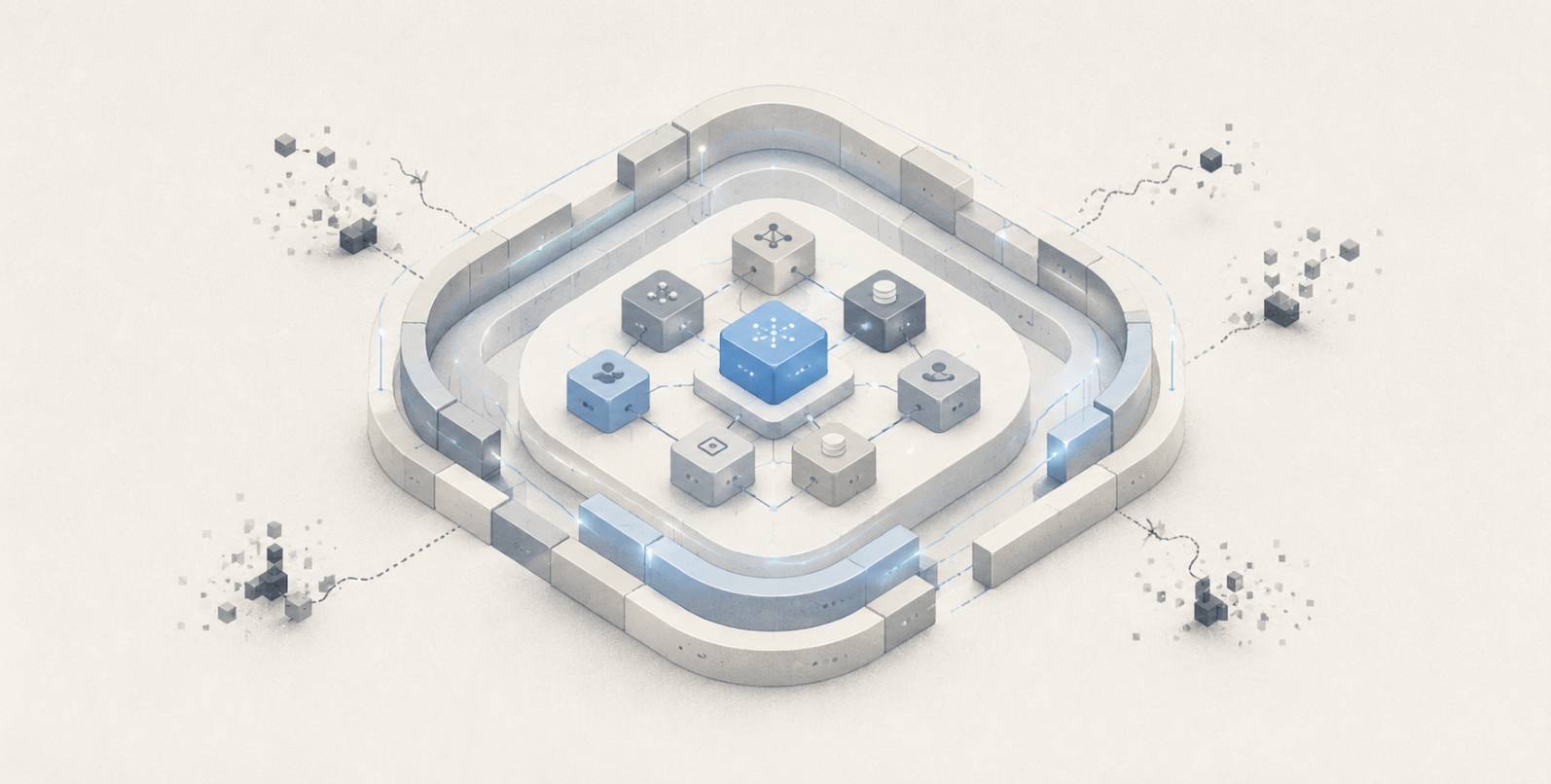
Artificial Intelligence has changed cybersecurity forever.
The same technology that helps organizations automate operations, write code, and improve customer experiences is also making cyberattacks faster, cheaper, and significantly more sophisticated.
For businesses investing in AI, cybersecurity can no longer be treated as an afterthought. Every AI application, autonomous agent, API, and model becomes part of the attack surface.
At GlobalNodes, we help organizations build secure AI solutions from the ground up. Security is not just about preventing attacks—it's about designing AI systems that remain trustworthy, resilient, and compliant as they scale.
Here are the 15 biggest cybersecurity lessons every business should understand before deploying AI.
Cybersecurity often feels complicated because of the endless list of tools and acronyms.
But the objective is surprisingly simple:
Prevent the business from being compromised.
Whether it's protecting customer information, preventing financial loss, securing intellectual property, or ensuring business continuity, every security investment supports this single objective.
The technologies may evolve—but the mission remains the same.
Modern security has two major components:
<numberList>
Application Security focuses on protecting software during development by:
Once software goes live, Production Security takes over.
It focuses on:
Organizations need both. Building secure software without protecting production environments leaves major security gaps.
</numberList>
Not every hacker is malicious.
<numberList>
Ethical hackers identify vulnerabilities and responsibly disclose them so organizations can fix issues.
Cybercriminals exploit vulnerabilities for financial gain, data theft, ransomware, or espionage.
One major warning sign is when someone discovers a vulnerability and demands payment before revealing it.
Responsible disclosure protects everyone.
</numberList>
Security conversations often become filled with abbreviations.
Here are five of the most important.
<numberList>
Scans source code before deployment to identify coding vulnerabilities.
Ideal for catching problems early in development.
Most applications rely heavily on open-source libraries.
SCA identifies:
Instead of reviewing code, DAST attacks the running application to discover weaknesses visible during runtime.
A WAF filters malicious traffic before it reaches your application.
It helps stop:
Pen testing simulates real-world attacks to discover exploitable vulnerabilities before attackers do.
It remains valuable—but today's AI landscape demands more than occasional testing.
</numberList>
AI has dramatically shifted cybersecurity.
Security teams now use AI to:
Meanwhile attackers use AI to:
The speed advantage now belongs to whoever uses AI better.
A few years ago, organizations could hope vulnerabilities stayed unnoticed.
That assumption no longer works.
AI allows attackers to:
Security strategies must shift from "Maybe attackers won't find it" to "They will find it—how do we minimize impact?"
Traditional applications execute code.
AI systems execute instructions.
That creates a completely new attack surface.
Prompt injection occurs when attackers manipulate an AI model into ignoring its intended behavior.
This can happen through:
As AI agents gain access to internal systems, prompt injection becomes one of the most dangerous security risks businesses face.
Many organizations connect AI assistants with:
If those integrations aren't properly secured, a single compromised AI interaction can expose sensitive enterprise data.
The lesson is simple:
Every integration expands the attack surface.
Traditional penetration testing often happens:
That approach worked when software releases were infrequent.
Today, AI-assisted development enables organizations to deploy code daily—or even multiple times per day.
New vulnerabilities can appear with every release.
Modern security requires:
Security must evolve at the same speed as software development.
Some of the most serious vulnerabilities originate from surprisingly small mistakes.
Examples include:
Simple coding oversights can affect millions of users and potentially expose critical infrastructure.
Secure development practices are essential—not optional.
AI agents are increasingly performing real business tasks.
That means they often receive permissions to:
The safest approach follows the Principle of Least Privilege.
Every AI agent should receive only the permissions necessary to complete its assigned task—and nothing more.
Businesses should also ask:
If this AI agent or device were compromised today, what systems could it access?
That question often reveals unnecessary security exposure.
Despite advances in AI, most successful cyberattacks still begin with people.
Common attack methods include:
Technology alone cannot solve these problems.
Regular security awareness training remains one of the highest-return investments organizations can make.
Attackers are already using AI to discover vulnerabilities faster than traditional security teams.
Organizations responding manually are increasingly at a disadvantage.
AI-powered security can help by:
The future of cybersecurity is AI defending against AI.
Many modern breaches are not caused by sophisticated malware.
They result from broken authentication and authorization.
One particularly dangerous issue is cross-tenant access, where one customer can unintentionally access another customer's data.
For SaaS businesses, this represents one of the highest-priority security risks because it directly affects customer trust and compliance.
Identity management should be validated continuously—not just during initial development.
Early-stage startups often move quickly with limited resources.
That's understandable.
However, the risk profile changes dramatically once a business:
At that stage, security needs clear ownership.
Whether it's a dedicated security engineer, DevSecOps team, or external security partner, someone must be accountable for protecting the platform as it grows.
At GlobalNodes, we believe security should be embedded throughout the AI development lifecycle—not added after deployment.
Our AI engineering approach includes:
By combining AI expertise with secure engineering practices, we help businesses deploy AI systems that are innovative, scalable, and resilient against evolving threats.
AI has fundamentally changed the cybersecurity landscape.
Attackers are becoming faster, more automated, and more sophisticated. At the same time, organizations have access to AI-powered defenses that can identify and respond to threats at unprecedented speed.
Success in 2026 isn't about choosing between AI and cybersecurity—it's about treating them as inseparable.
Businesses that build secure AI from day one will be better positioned to innovate, earn customer trust, and scale confidently.
If your organization is developing AI applications, autonomous agents, or enterprise automation solutions, now is the time to make cybersecurity a core part of your AI strategy—not an afterthought.
Both. AI helps security teams detect and respond to threats more quickly, but it also enables attackers to automate phishing, vulnerability discovery, and malware creation at scale.
Prompt injection is an attack where malicious instructions are hidden in user inputs, documents, websites, or other content to manipulate an AI model into performing unintended actions or exposing sensitive information.
AI-assisted development speeds up software releases, which means new vulnerabilities can appear frequently. Continuous testing helps identify and address security issues before they are exploited.
Organizations should follow the principle of least privilege, limit access to sensitive systems, validate external inputs, monitor agent behavior, and regularly audit permissions and integrations.
Embedding security into the AI development lifecycle helps reduce vulnerabilities, improve compliance, protect customer data, and build trustworthy AI systems that can withstand evolving cyber threats.
Have a project in mind? We'd love to hear about it. Tell us what you're building and let's explore what's possible.
hello@globalnodes.com
+91 9873388887