Blog
AI Agent Architecture Explained

July 23, 2026

time
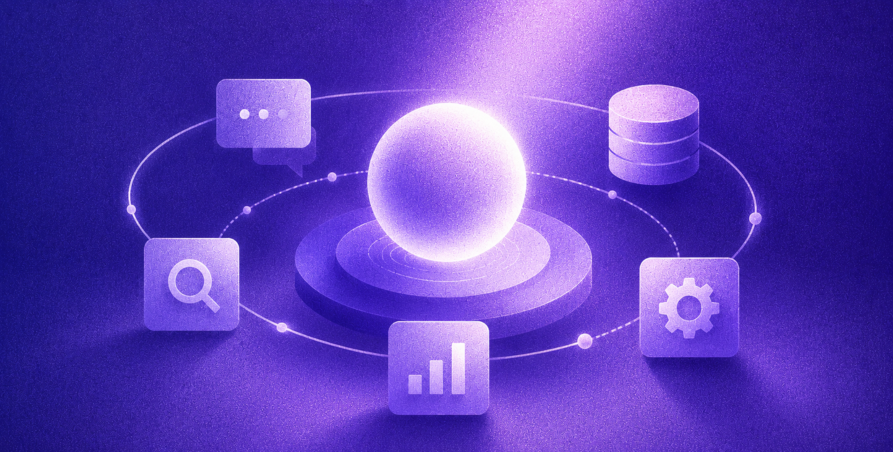
Artificial intelligence is rapidly shifting from simple chatbots to autonomous systems capable of planning, reasoning, and completing complex business tasks. These intelligent systems are known as AI agents, and their effectiveness depends on a well-designed agent architecture.
Understanding agent architectures in AI helps businesses build solutions that are reliable, scalable, and capable of handling real-world enterprise workflows.
An AI agent architecture is the framework that defines how an AI agent perceives information, makes decisions, executes actions, and learns from outcomes. Instead of simply responding to prompts, AI agents can understand goals, access enterprise data, use external tools, and complete multi-step tasks with minimal human intervention.
Unlike traditional automation, AI agents can adapt to changing inputs, reason through problems, and improve decision-making over time.
The agent receives information from various sources, including:
This layer ensures the agent has the context needed to perform its task.
Memory enables an AI agent to retain information across conversations and workflows.
It typically includes:
This allows agents to provide context-aware and personalized responses.
This is the intelligence engine of the architecture.
Large Language Models (LLMs) analyze the objective, break it into smaller tasks, evaluate possible actions, and create execution plans before responding.
Advanced agents can even revise their plans based on new information.
Modern AI agents are valuable because they can interact with external systems.
Typical integrations include:
The agent doesn't just answer questions—it performs real business actions.
Once a decision is made, the execution layer performs the required actions, such as:
This transforms AI from an assistant into an operational team member.
Enterprise AI requires continuous monitoring for:
This layer helps organizations optimize AI performance while maintaining governance.
These agents respond only to current inputs without retaining memory. They are suitable for simple customer support or FAQ systems.
These agents evaluate different actions to achieve a specific objective, making them ideal for workflow automation and business process optimization.
Utility-based agents compare multiple outcomes and choose the one that delivers the highest value based on predefined criteria.
These architectures continuously improve using feedback, historical data, and user interactions. They are widely used in recommendation systems and predictive analytics.
Multiple AI agents collaborate to solve complex enterprise problems. Each agent specializes in a specific task while coordinating with others to achieve broader business objectives.
An AI support agent retrieves customer history from a CRM, searches the company knowledge base, drafts responses, escalates complex issues, and updates support tickets automatically.
Healthcare AI agents analyze patient records, monitor recovery progress, identify risk factors, recommend follow-up care, and notify clinicians when intervention is required.
Banks use AI agents to verify transactions, detect fraud, generate compliance reports, and assist analysts with regulatory documentation.
AI agents monitor inventory, forecast demand, recommend purchase orders, coordinate with suppliers, and alert managers about potential disruptions.
Recruitment agents screen resumes, schedule interviews, answer candidate questions, generate job summaries, and maintain applicant tracking systems.
Successful AI agent architecture should include:
These practices ensure AI agents remain trustworthy and aligned with business objectives.
Organizations are adopting AI agents because they can:
With advancements in foundation models and enterprise AI platforms, agent-based systems are becoming a core part of digital transformation strategies.
AI agents are reshaping how businesses operate by combining reasoning, memory, automation, and enterprise integrations into intelligent systems capable of executing complex tasks.
A robust agent architecture is the foundation that enables these systems to work effectively. As organizations continue adopting agent architectures in AI, businesses that invest in scalable, secure, and well-designed AI agents will be better positioned to improve efficiency, enhance customer experiences, and gain a competitive advantage in the AI-driven economy.
Have a project in mind? We'd love to hear about it. Tell us what you're building and let's explore what's possible.
hello@globalnodes.com
+91 9873388887